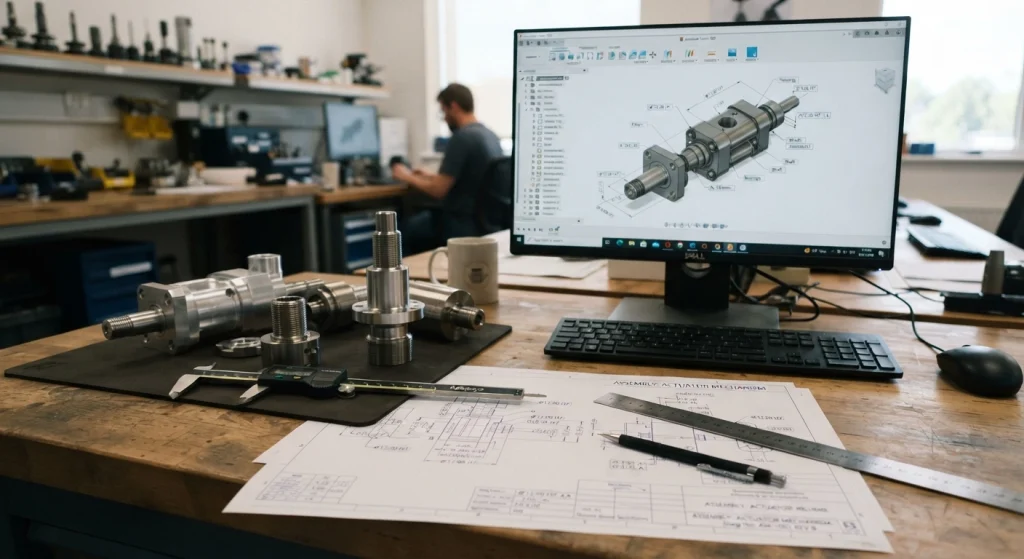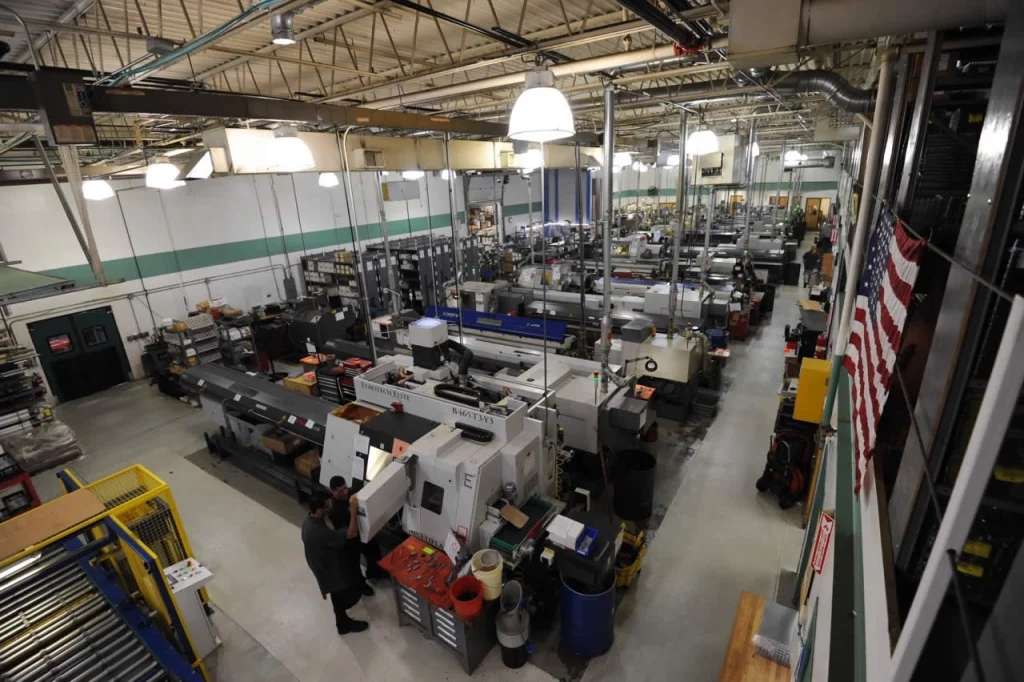

Imagine you’re a commercial procurement manager responsible for sourcing a specialist engineering contractor for a $350,000 industrial project.
The technical requirements are clear. The project timeline is tight. Your engineering department needs a capable supplier, and senior management expects you to identify a reliable partner without exposing the business to unnecessary operational or financial risk.
You begin evaluating potential vendors.
The first company has an impressive list of completed projects, operates a substantial facility, and appears to have the technical capabilities you need.
But its website tells a different story.
The navigation is confusing. Technical specifications are buried inside outdated PDF brochures. Certifications are difficult to locate. And when you finally find the contact page, you’re presented with a generic form that provides no indication of who will receive your enquiry.
You submit your requirements anyway.
Three business days pass without a meaningful response.
Meanwhile, another supplier provides clear technical documentation, an accessible project enquiry form, and a prompt acknowledgment from its commercial team.
Which company would you feel more confident recommending?
This is the uncomfortable reality many established industrial businesses overlook: Your operational capabilities might qualify you for a contract, but your website and enquiry process influence whether buyers investigate those capabilities in the first place.
For procurement professionals, digital accessibility isn’t merely a convenience. It is part of an efficient, defensible supplier evaluation process.

Procurement Managers Are Evaluating Risk, Not Just Price
Industrial procurement isn’t simply about identifying the lowest quotation.
Depending on the project, a purchasing decision can influence equipment reliability, production schedules, regulatory compliance, operational safety, and long-term maintenance costs.
A poor supplier decision can create consequences far beyond the original contract value.
This is why procurement professionals need credible, accessible information before recommending potential vendors.
During initial supplier evaluation, I would typically want to establish:
- Whether the company offers the required technical capabilities.
- Whether relevant certifications, licenses, and insurance documentation are available.
- Whether the supplier has experience with comparable projects.
- Whether its geographical coverage aligns with project requirements.
- Whether the company has a clear process for quotations and technical enquiries.
- Whether the supplier communicates promptly and professionally.
Your website should support this evaluation.
It doesn’t need to replace formal due diligence, but it should provide enough information to establish whether your company deserves further consideration.
When that information is difficult to find, your business becomes harder to evaluate.
And when multiple capable suppliers are competing for attention, unnecessary friction can become a commercial disadvantage.
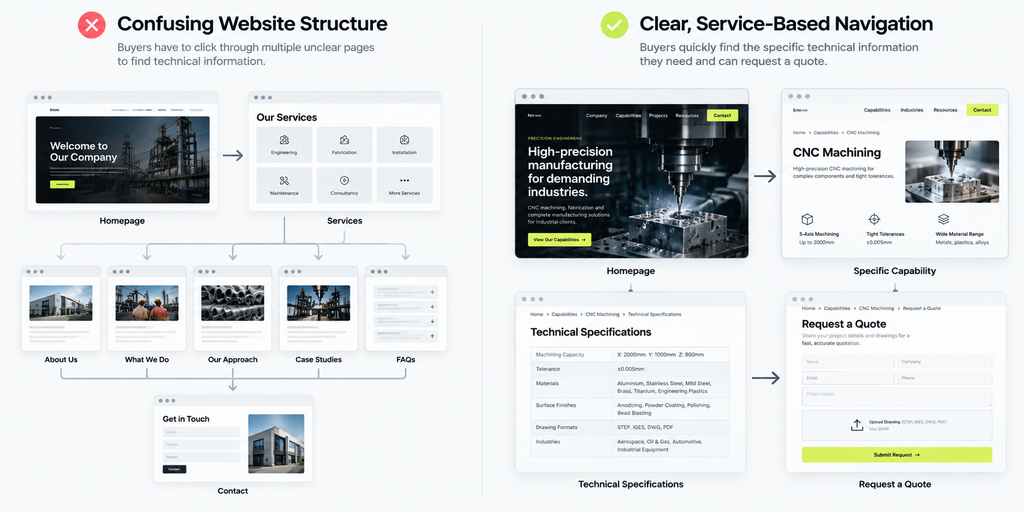
1. Confusing Navigation Makes Supplier Evaluation Unnecessarily Difficult
Consider visiting an industrial contractor’s website to determine whether it provides commercial refrigeration installation for large distribution facilities.
You open the services page.
Instead of finding a dedicated refrigeration section, you encounter vague headings such as “Innovative Solutions,” “Our Expertise,” and “Integrated Services.”
You navigate through several pages before discovering a short paragraph mentioning refrigeration.
There’s no explanation of the systems supported, project scale, geographical coverage, or maintenance capabilities.
From a procurement perspective, the problem is immediate: the website requires too much effort to establish basic supplier suitability.
Engineering and commercial buyers often evaluate vendors against defined criteria. They need to identify relevant information quickly, not interpret ambiguous marketing language.
How modern website architecture solves this
A properly structured industrial website organizes information around the way buyers search for and evaluate services.
For a commercial HVAC contractor, that might mean dedicated pages for:
- Commercial HVAC Installation
- Industrial Refrigeration Systems
- Preventive Maintenance Contracts
- HVAC Retrofit and Replacement
- Emergency Repair and Service Coverage
Each page should explain the relevant capabilities, supported environments, technical considerations, and process for requesting a quotation.
The main navigation should make these services accessible within a few logical steps.
Clear website architecture reduces the effort required to determine whether a supplier is technically suitable.
It also supports search engine visibility by giving individual services dedicated, descriptive pages that can be discovered through relevant Google searches.
2. Hidden Technical Specifications Create Uncertainty
Suppose I’m evaluating two precision engineering companies for a production contract involving high-tolerance machined components.
Both companies claim to provide advanced CNC machining.
The first website features photographs of machining equipment and broad statements about precision, quality, and reliability.
However, I cannot determine which materials the company handles, what its machining capabilities are, or whether its quality management processes meet our requirements.
The second website provides dedicated technical capability pages.
It identifies supported materials, relevant machining processes, equipment specifications, production capacity, and applicable quality certifications.
Where appropriate, it also provides downloadable capability statements and technical documentation.
Which business is easier to shortlist?
The second.
Not necessarily because it has better machinery or more experienced engineers, but because it gives procurement professionals the evidence needed for preliminary evaluation.
Technical transparency establishes credibility
Industrial buyers don’t expect every proprietary manufacturing detail to be published online.
They do, however, expect sufficient information to determine whether further engagement is worthwhile.
Depending on your industry, useful information may include:
Precision engineering: Materials, machining processes, machine capacity, achievable tolerances, and inspection methods.
Fire protection: Supported systems, relevant certifications, compliance standards, installation capabilities, and maintenance services.
Commercial construction: Project categories, geographical coverage, licensing information, safety credentials, and relevant completed projects.
Technical equipment supply: Product specifications, downloadable data sheets, compatible applications, and equipment support arrangements.
A well-designed industrial website makes this information easy to locate, understand, and share with internal stakeholders.
It should also clearly distinguish verified certifications from general quality claims.
For procurement managers presenting a supplier recommendation to engineering teams, accessible technical documentation can substantially simplify the evaluation process.
3. Outdated Contact Methods Create Doubts About Responsiveness
Finding a technically capable supplier is only the beginning.
The next challenge is getting a meaningful response.
Imagine submitting an RFQ for a $200,000 commercial mechanical installation.
The supplier’s website lists a general email address but provides no dedicated quotation process.
You send project drawings, technical requirements, and an expected delivery schedule.
There’s no acknowledgment.
You call the listed telephone number the following day, only to discover that the person responsible for quotations is unavailable.
Eventually, someone responds asking you to resend information already provided.
At this stage, the concern extends beyond inconvenience.
If basic commercial communication is disorganized before a contract is awarded, what confidence should I have in communication during a technically demanding project?
To be clear, a slow response doesn’t automatically mean a supplier is incapable.
But it introduces uncertainty at precisely the point where buyers are trying to reduce it.
Make technical enquiries easy to submit and manage
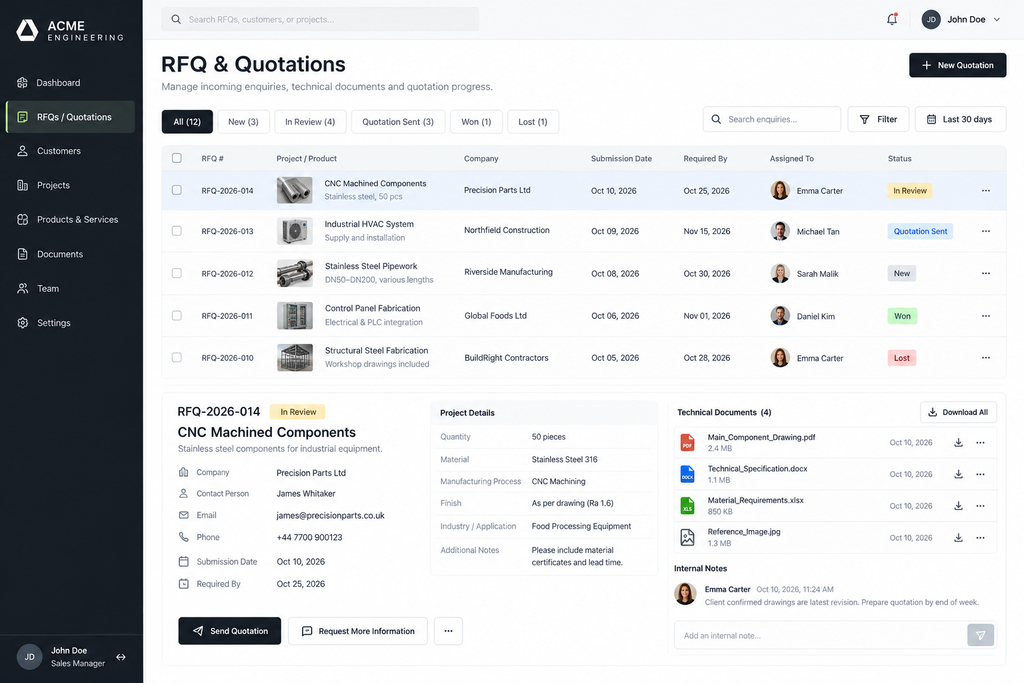
Modern industrial websites should provide a dedicated route for commercial RFQs.
Depending on the business, this could include:
- Structured project enquiry forms.
- Secure uploads for CAD drawings and technical specifications.
- Fields for project location, requirements, quantities, and deadlines.
- Automatic submission acknowledgments.
- Internal notifications to appropriate commercial or engineering personnel.
- CRM integration for tracking enquiries and follow-ups.
A quotation system should also make clear when buyers can expect an initial response.
This does not mean promising a complete technical quotation within 24 hours. Complex industrial projects may require detailed engineering assessments.
Instead, it means acknowledging receipt promptly, establishing the next steps, and maintaining communication throughout the evaluation process.
Responsiveness is not simply about replying quickly. It’s about demonstrating that a prospective customer’s project is being handled through a reliable process.
4. Slow Websites Undermine Confidence Before the First Conversation
Imagine opening a potential supplier’s website during a procurement review meeting.
The homepage loads slowly.
Equipment photographs appear in stages. The navigation is unresponsive. A technical brochure fails to open correctly on your mobile device.
These issues don’t prove anything about the company’s manufacturing ability.
However, they make the evaluation process more difficult.
When procurement managers are comparing multiple suppliers, digital friction can create an unnecessary obstacle between technical interest and commercial engagement.
Modern website architecture addresses these problems through performance optimization, responsive layouts, efficient asset delivery, and properly maintained infrastructure.
Google recommends that websites achieve a Largest Contentful Paint of 2.5 seconds or less for a good loading experience, measured at the 75th percentile of page visits. Its Core Web Vitals also assess interaction responsiveness and visual stability.
These benchmarks provide useful technical performance targets.
For an industrial website, the practical objective is straightforward: buyers should be able to access capability information, inspect documentation, and submit enquiries without unnecessary delays.
A website that works consistently across desktop and mobile devices makes the supplier evaluation process easier.
5. Poor Digital Communication Can Keep You Off the Shortlist
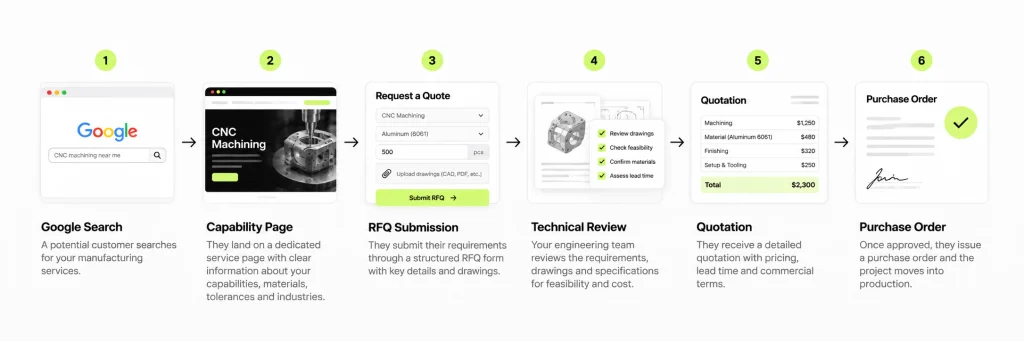
Consider the complete procurement journey.
A buyer searches Google for a specialist supplier, reviews relevant companies, compares technical capabilities, checks certifications, contacts potential vendors, and requests quotations.
Your website influences several stages of that process.
If your business is difficult to find in relevant searches, you may never enter the initial consideration set.
If your technical information is incomplete, buyers may struggle to establish suitability.
If the RFQ process is cumbersome or communication is inconsistent, a promising enquiry may never progress to a formal quotation.
These problems are particularly important for established industrial firms whose websites no longer reflect their operational capabilities.
A company may operate a multimillion-dollar facility, employ experienced engineers, and successfully deliver complex projects while presenting an online experience that communicates very little of that expertise.
The solution isn’t necessarily a more elaborate visual design.
It’s a website built around technical credibility, efficient supplier evaluation, and reliable commercial communication.
What a Procurement-Ready Industrial Website Should Deliver
From a procurement manager’s perspective, a strong industrial website should make five tasks straightforward.
Discover the supplier. Relevant service pages and technical SEO should help buyers find the business when searching for specific capabilities.
Verify technical suitability. Clear specifications, capability statements, certifications, and project evidence should support initial assessment.
Understand service coverage. Buyers should be able to determine whether the supplier supports their location, industry, equipment, or project requirements.
Submit a structured enquiry. Dedicated RFQ forms should allow buyers to communicate requirements and securely provide relevant documentation.
Receive reliable communication. Clear acknowledgment and organized follow-up processes should demonstrate commercial professionalism.
None of these improvements guarantees a contract.
Supplier selection still depends on technical capability, pricing, quality assurance, capacity, commercial terms, and the buyer’s procurement requirements.
However, a website that supports these five tasks gives capable suppliers a better opportunity to demonstrate their suitability.
Your Next Major Contract May Begin With a Website Visit
Industrial companies invest heavily in machinery, certifications, skilled personnel, safety systems, and operational efficiency.
Those investments create genuine competitive advantages.
But if a prospective buyer cannot easily discover, understand, or verify those capabilities, the commercial value of those investments may not be fully represented online.
A slow, confusing, or outdated website doesn’t automatically disqualify a capable supplier. For some procurement teams, though, it can introduce enough friction or uncertainty to prevent further consideration.
And when competing for six-figure contracts, being overlooked can be expensive.
Your website should function as more than an online company profile.
It should support the same standards of clarity, reliability, and professionalism that your customers expect from your operations.
Make Your Website Easier for Industrial Buyers to Evaluate
At Cruxe Studio, we help industrial, engineering, and commercial service providers improve how their businesses are discovered and evaluated online.
Through custom website design, technical SEO, structured RFQ experiences, and ongoing website support, we focus on making your technical capabilities easier to communicate and your business easier to contact.
If your existing website no longer reflects the scale or professionalism of your operation, it may be time to address the gap.