
Generic service descriptions
Broad statements about quality and expertise do little to explain what your business can actually deliver. Buyers need useful details about services, products, applications and capabilities.
WEB DESIGN & REDESIGNS
Your website should help prospective buyers understand what you offer, evaluate whether you are the right fit and take the next step with confidence. Cruxe designs and develops purposeful websites for industrial, engineering and technical B2B businesses, built around the information their customers actually need.
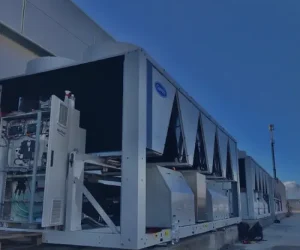
CNC machining · Prototype to production
Precision components for demanding applications.
THE COMMERCIAL ROLE OF YOUR WEBSITE
For many industrial and technical businesses, the website is an early point of supplier evaluation. Before contacting you, a potential customer may need to confirm whether you provide the right service, work with the required specifications, serve their location or have relevant experience.
A useful website makes these answers easier to find. It provides enough clarity to establish relevance, enough evidence to support confidence and a straightforward route to the next conversation.
01 — FIT
Does this business provide the product or service we need?
02 — CAPABILITY
Can it meet our technical, operational or project requirements?
03 — CREDIBILITY
What experience, processes or credentials support its claims?
04 — NEXT STEP
How do we request a quote or speak with the right person?
WHERE WEBSITES UNDERPERFORM
An outdated design may be obvious. The more expensive problems are often less visible: information that is difficult to find, capabilities that are poorly explained and enquiry journeys that create unnecessary work for buyers.
Broad statements about quality and expertise do little to explain what your business can actually deliver. Buyers need useful details about services, products, applications and capabilities.
Technical specifications, supported industries, documentation and credentials may exist, but not where customers expect to find them.
When a website lacks a clear structure, consistent information or credible supporting evidence, visitors may struggle to determine whether the business belongs on their shortlist.
A buyer should not have to search several pages for contact details or send a vague message when a more structured quotation request would be useful.
WEB DESIGN & DEVELOPMENT
A good website is not a collection of attractive pages. It is a connected system of information, design and functionality that supports the way prospective customers discover, evaluate and contact your business.
01
Define the website's purpose, the needs of its audiences, the most important content and how pages should connect. Establish a clear structure before visual design begins.
02
Develop a responsive visual experience that reflects your business, communicates technical information clearly and makes important actions easy to recognise.
03
Create useful pages for individual services, processes, product categories and industries, with space for specifications, applications, supporting evidence and practical buyer questions.
04
Make contact forms, quotation requests, consultation enquiries and other next steps relevant to the type of information customers need to provide.
05
Build clean, accessible, maintainable pages that work across desktop, tablet and mobile, with attention to usability, loading performance and search-friendly structure.
06
Organise approved content, check essential functionality, prepare the website for launch and provide an agreed handover so the business can manage its website confidently.
The exact deliverables depend on the project's scope. More specialised functionality, such as advanced catalogues and RFQ systems, can be scoped separately.
DESIGNED FOR REAL BUYING JOURNEYS
Consider how a procurement manager might evaluate a precision machining supplier. The website should help them move from a broad need to a confident decision without making them hunt for information.
The buyer lands on a page describing the machining process or component type they need.
Materials, production capabilities, tolerances and application information help them assess suitability.
Quality processes, approved credentials, relevant experience and delivery information help establish confidence.
A structured form allows the buyer to share quantities, requirements and drawings where appropriate.
The exact journey differs by sector. A fire protection contractor, packaging manufacturer and equipment distributor do not need identical websites.
THE RIGHT LEVEL OF CHANGE
A complete rebuild may be appropriate when a website no longer supports the business. In other cases, improving its structure, key pages or enquiry process may be the more practical investment.
If the platform is dependable and the problems are concentrated in a few areas, focused improvements may deliver better value than rebuilding everything.
Possible work:
When the existing site is difficult to maintain, poorly structured or no longer reflects the business, a strategic redesign can provide a clearer foundation.
Possible work:
The recommendation follows the assessment, not the other way around.
STRATEGY BEFORE EXECUTION
Review the business, its customers, existing website and commercial priorities. Where appropriate, this begins with a scoped Commercial Website & Growth Audit.
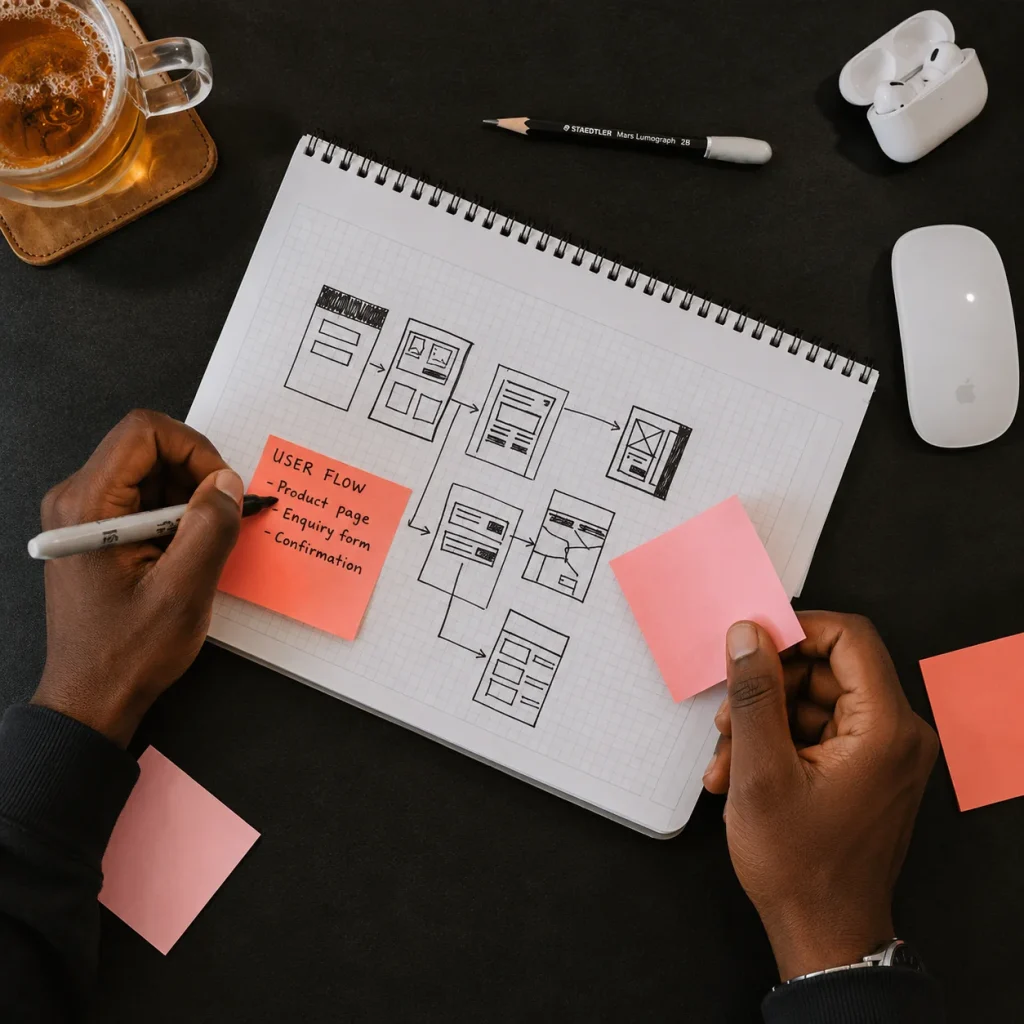
Plan the sitemap, priority pages, content hierarchy and buyer journeys before designing screens.
Develop the visual direction, page layouts and reusable components. Make sure form and function support the same purpose.
Build the agreed website, populate approved content and test responsiveness, usability, forms and technical functionality.
Complete launch checks, hand over the agreed assets and identify any ongoing maintenance or optimisation requirements.
DIFFERENT BUSINESSES. DIFFERENT REQUIREMENTS.
Process capabilities, machinable materials, technical specifications, quality information and drawing-based quotation requests.
Installation and maintenance services, relevant approved credentials, compliance information, sector experience and clear enquiry routes.
Product types, packaging applications, material options, customisation possibilities and volume-based enquiry journeys.
These are examples of the information architecture each sector may need, not standard features imposed on every project.
DIRECT COLLABORATION
Cruxe Studio operates as an independent practice. You work directly with the person shaping the strategy, designing the experience and overseeing delivery.
That keeps communication clear, decisions connected to the original brief and the project focused on what the business actually needs.
The engagement is scoped around the work involved rather than an unnecessarily large service package.
Discuss your websiteFAQs
Not necessarily. If your current website has a sound technical foundation, improvements to its structure, content or enquiry flow may be more sensible. A redesign should solve identifiable problems, not simply introduce a different appearance.
Yes. Existing WordPress websites can be assessed and improved where their current setup is suitable. The recommended platform and development approach depend on the functionality, content and maintenance requirements of the project.
Content planning, page structure and copy support can form part of an agreed project. Technical specifications, qualifications and factual claims must be checked and approved by the business.
Responsive behaviour is considered throughout the design and development process, rather than being treated as an adjustment made at the end.
It depends on the existing website, number and complexity of pages, required functionality, content needs and level of development involved. A defined scope and proposal establish the investment before work begins.
CONNECTED CAPABILITIES
Whether you are considering a complete redesign or a few focused improvements, the first step is understanding where the website is falling short and what deserves attention.