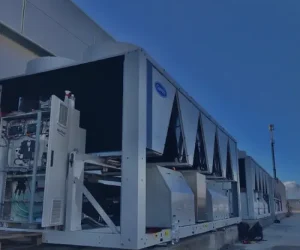
Commercial HVAC contractors may offer installation, planned maintenance, repairs and specialist system work, each with different buyers and urgency. We build websites and search strategies that make those services clear, establish credible project experience and support relevant commercial enquiries.
Separate project installation, routine maintenance and faults so the right people reach the right service with the context your team needs.
A facilities manager reviewing maintenance partners does not evaluate suppliers in the same way as a project manager specifying a new ventilation installation. Website structure should acknowledge contract value, response requirements and building type.
Facilities teams evaluate coverage, response expectations, system experience and how contracts are managed.
Commercial fit-outs and replacements need evidence of system capability, coordination and completed work.
Service visitors want to identify whether a provider supports their equipment and location and how to report the issue.
Offices, retail, healthcare, hospitality and industrial facilities have different system constraints.
Qualifications, approved manufacturer relationships and relevant project details help buyers assess fit.
Service maps and response commitments must reflect actual engineer coverage, not marketing aspirations.

A website can look reasonably professional and still leave important buyer questions unanswered. These are the gaps we would assess first.
Domestic split-system imagery and generic “air conditioning near me” copy obscure commercial capabilities.
Project and facilities buyers cannot easily determine which team, service model or contract the company provides.
The site claims commercial expertise but lacks examples of plant types, site conditions or completed work.
Not every element belongs on every site. We determine which information and functions are commercially justified, then build a clear structure around the company’s real offering.
Installation, planned maintenance, repairs, replacement and specialist ventilation pages where relevant.
Show actual experience with offices, schools, warehousing, hospitality and other served facilities.
Scope, systems, constraints, programme and genuine project imagery with permission.
Explain the service process, what is included and how coverage or response requirements are agreed.
Publish accurate geographic service limits, applicable certifications and verifiable partnerships.
Different forms or options for new projects, maintenance contracts and repair requests.
A stronger site gives relevant visitors a better experience. Organic search, local discovery, Google Ads and AI-assisted search need different tactics, but they should all point to accurate, helpful content.
Optimise specific commercial HVAC services and locations without thin, duplicate location pages.
For eligible service-area businesses, maintain accurate coverage, categories, hours and service descriptions.
Target relevant commercial terms carefully and route users to suitable service pages; avoid domestic search waste where inappropriate.
Provide factual system, service and coverage information that is accessible and consistently described online.
For technical B2B businesses, a good form does more than collect an email address. It helps the buyer choose an appropriate next step and gives the sales or estimating team usable context.
The information worth capturing.
Service category; building type; location; system or equipment details; existing vs new installation; maintenance frequency if applicable; urgency; preferred contact route; business contact.
A form should ask only what is necessary at this stage. Confirm privacy, consent, file security and operational routing before enabling uploads or sensitive requests.
We work directly with the business to understand the commercial context, determine the right scope and deliver focused improvements. The same process can support a new website, a redesign or a narrower search project.
We start with the services or products you want to sell, who evaluates them and where commercial opportunities currently originate.
We examine important pages, the information buyers need, search visibility and the route from interest to enquiry.
We recommend the website, content or acquisition changes most likely to address the identified friction, within an agreed scope.
You provide the technical details and credentials. We turn them into a clear, effective digital experience tailored to your HVAC business.
Where tracking is available, we monitor relevant search actions, qualified enquiries or RFQs and adjust the work based on evidence.
A focused review identifies messaging gaps, missed search opportunities, credibility issues and buyer friction—delivering clear, prioritised recommendations tailored to your business.
Rankings and clicks are useful diagnostics, but the priorities should be linked to how the business sells. Specific targets depend on your starting point, conversion tracking and actual commercial model.
Visitors self-select the service and building type before enquiring.
Planned servicing becomes a visible offering, not a footnote.
Completed commercial work helps procurement and facilities teams evaluate competence.
Messaging and search targeting better distinguish commercial work from residential enquiries.
Cruxe Studio combines website design, search visibility and carefully chosen acquisition work. Some businesses need a full rebuild. Others benefit more from improving service pages, product information or their quotation process.
Information architecture, useful capability or service pages, credible evidence and carefully designed enquiry journeys. A redesign should change more than appearance.
Technical SEO, search-informed page structure, relevant content and accurate Google Business Profile work where applicable. Search visibility is tied to real services and buyer needs.
Paid search when demand, capacity, measurement and client economics justify it. Campaigns should be aligned with focused landing pages and assessed on enquiry quality.
Clear, original business information and technically accessible content that may support discovery through AI-assisted search. Placement or citation in AI answers cannot be guaranteed.
A few practical questions about technical accuracy, search visibility, enquiries and what a realistic engagement can achieve.
Make commercial positioning explicit, use building-specific service pages and qualify forms. Paid campaigns can also use negative keywords and geographic controls.
Generally yes when each has distinct buyers, evaluation criteria and intended enquiries. The content should reflect how your business actually operates.
Yes. The form can ask about site count, equipment types, servicing needs and location, with required fields kept proportionate.
No. Ads are appropriate only when market demand, economics, tracking and internal response capacity make them sensible.
Only if the business can fulfil them. Any stated availability or response time should be approved by the operational team.
Project context, building type, the systems involved, constraints, your actual scope and any approved evidence of outcomes.
LET'S START WITH YOUR BUSINESS
Whether you need a clearer website, stronger search visibility or a better way for customers to request quotations, the first step is understanding the opportunity. Tell me about your business, what you're trying to achieve and where your current online presence may be falling short.