

Imagine you’re a commercial property manager evaluating contractors for a $450,000 fire protection system upgrade.
You’ve shortlisted three companies.
The first website features attractive photographs, a broad promise of quality service, and a generic contact button.
The second lists its services but provides little evidence of licensing, safety procedures, or relevant technical qualifications.
The third immediately communicates its fire protection expertise, service coverage, applicable credentials, and access to supporting compliance documentation.
Which company would you investigate first?
The third supplier has made the initial evaluation easier.
For commercial property managers, industrial procurement officers, and engineering directors, selecting a contractor isn’t simply about finding someone who can complete the work.
It’s about identifying a supplier capable of meeting technical requirements while minimizing safety, financial, regulatory, and operational risks.
Your website should communicate that credibility before a potential buyer has to search for it.
That is why properly presented certifications, licenses, safety credentials, and compliance information deserve prominent placement on industrial and commercial contractor websites.
Why the First Few Seconds Matter in Industrial Supplier Evaluation
When a commercial buyer lands on your website, they’re trying to answer several questions.
Does this company provide the service we need?
Does it appear experienced enough to handle our project?
Can it demonstrate the qualifications required for our industry?
Is there sufficient information to justify further evaluation?
The first few seconds can influence whether a visitor continues exploring.
However, there is no universal procurement rule stating that a buyer must find a certification within exactly three seconds. Enterprise supplier decisions typically involve formal checks and multiple stakeholders.
The practical design principle is that essential qualification information should be immediately recognizable.
In web design, above the fold refers to the part of a webpage visible before a user scrolls.
For industrial companies, this area is valuable because it establishes the initial context for a supplier’s capabilities.
A well-designed homepage might immediately display:
- A clear description of the company’s primary technical services.
- Relevant, verified certifications or professional qualifications.
- Geographical or industry-specific service coverage.
- Evidence of relevant project experience.
- A visible route to request a quotation or technical consultation.
This doesn’t replace formal supplier due diligence.
It helps buyers decide whether your business deserves further investigation.
1. ISO 9001: Communicating Quality Management Credibility
For manufacturers, engineering contractors, and technical suppliers, ISO 9001 certification can be an important trust signal.
ISO 9001 establishes requirements for a quality management system.
Certification provides independent evidence that an organization’s quality management system has been assessed against the applicable standard.
For industrial procurement teams, this can be relevant when evaluating suppliers expected to maintain documented processes, manage nonconformities, and support consistent operational performance.
Consider a procurement manager sourcing precision-machined components for a long-term supply agreement.
A manufacturer displaying a valid ISO 9001 certification statement provides a starting point for quality-related verification.
That doesn’t guarantee every manufactured component will meet specification. It does, however, provide evidence of an independently assessed management system within the certificate’s stated scope.
How to display ISO 9001 credentials correctly
If your business holds valid ISO 9001 certification, your website should identify the standard, certification body, and relevant certification details.
Provide access to the certificate or an appropriate verification method.
Avoid presenting an ISO logo as though ISO itself certified your company.
ISO does not issue ISO 9001 certificates, and its official logo cannot generally be used to advertise certification.
The correct approach is to use an accurate certification statement and, where permitted, the certification body’s authorized mark.
The objective is verifiable quality assurance, not simply adding another logo to your homepage.
2. AS9100: A Critical Credential for Aerospace Manufacturing Suppliers
For precision engineering firms operating in aerospace and defense supply chains, AS9100-series quality management certification can be particularly important.
Aerospace manufacturing involves demanding expectations around quality management, traceability, risk management, and supplier control.
An organization holding an applicable 9100-series certification has undergone assessment against aerospace quality management system requirements.
For a procurement professional evaluating a potential machining supplier, this can be relevant evidence during preliminary qualification.
Imagine an aerospace manufacturer seeking a subcontractor for complex machined components.
One supplier describes itself as delivering aerospace-quality manufacturing.
Another provides its applicable aerospace quality management certification details and clear information about its manufacturing capabilities.
The second supplier has provided more tangible evidence for evaluation.
Make certification status verifiable
The International Aerospace Quality Group maintains the Online Aerospace Supplier Information System (OASIS), which supports verification of recognized aerospace quality management certifications.
A manufacturer can make verification easier by identifying its certification scope and explaining how buyers can confirm its status.
The website should also make relevant technical capabilities easy to locate.
A certification badge without information about machining processes, materials, inspection capabilities, or production capacity is not enough to establish project suitability.
Enterprise buyers need both verified qualifications and evidence of technical capability.
3. NFPA Standards: Demonstrating Fire Protection Expertise Without Misleading Buyers
For fire protection contractors, safety engineering companies, and commercial building service providers, references to NFPA standards may be relevant.
The National Fire Protection Association develops codes and standards covering areas such as fire alarms, sprinkler systems, electrical safety, and life safety.
For example, depending on the project and jurisdiction, relevant standards may include:
- NFPA 13 — Installation of Sprinkler Systems.
- NFPA 25 — Inspection, Testing, and Maintenance of Water-Based Fire Protection Systems.
- NFPA 72 — National Fire Alarm and Signaling Code.
- NFPA 70 — National Electrical Code.
However, an important distinction must be made.
Following an NFPA standard is not the same as holding an NFPA certification.
There is no universal NFPA compliance seal that automatically certifies an entire fire protection contracting business.
Requirements may depend on the relevant jurisdiction, adopted codes, contractor licenses, personnel qualifications, and project scope.
What should fire protection contractors display?
Instead of placing an unsupported NFPA logo on a website, contractors should communicate specific, verifiable information.
This might include applicable contractor licenses, relevant professional qualifications, authorized certifications, and the standards used in their work.
For example:
“Commercial fire sprinkler installation and maintenance performed in accordance with applicable codes, adopted standards, and local licensing requirements.”
A company could then provide more detailed information about relevant qualifications and supporting documentation.
Where individual employees hold NFPA-issued credentials, their qualifications should be described accurately without implying that the entire company has received an equivalent organizational certification.
This approach builds trust without overstating compliance.
For commercial property managers, clear and verifiable information is considerably more valuable than a decorative safety badge.
4. Other Trust Signals That Matter to Commercial Buyers
ISO 9001, AS9100, and NFPA-related credentials aren’t appropriate for every industrial business.
The right trust signals depend on the services offered and the requirements of the buyer.
A commercial electrical contractor, for example, may need to demonstrate valid electrical licensing, applicable safety qualifications, and experience working on occupied commercial properties.
A mechanical engineering contractor may need to communicate professional registrations, insurance coverage, safety procedures, and industry-specific accreditations.
A specialist manufacturer may benefit from displaying relevant quality certifications, inspection capabilities, approved supplier status, and applicable material or process qualifications.
Other useful credentials may include:
Health and safety documentation: Evidence of relevant safety training, safety management procedures, and appropriate contractor qualifications.
Insurance verification: Clear information about appropriate insurance coverage, supported by documentation when requested.
Professional licensing: Current licenses and registrations relevant to the location and type of work performed.
Industry-specific approvals: Valid certifications or authorizations required for particular manufacturing processes, materials, equipment, or industries.
Project evidence: Documented experience delivering work similar in complexity, scale, and technical requirements to the buyer’s project.
The objective is not to display the largest possible collection of logos.
It’s to present evidence directly relevant to the risk the buyer is trying to evaluate.
5. How to Design an Above-the-Fold Compliance Section That Builds Trust
Even legitimate certifications can lose much of their communication value when they’re buried in an outdated website footer or hidden inside a downloadable company brochure.
A stronger industrial homepage presents essential credentials near the primary company introduction.
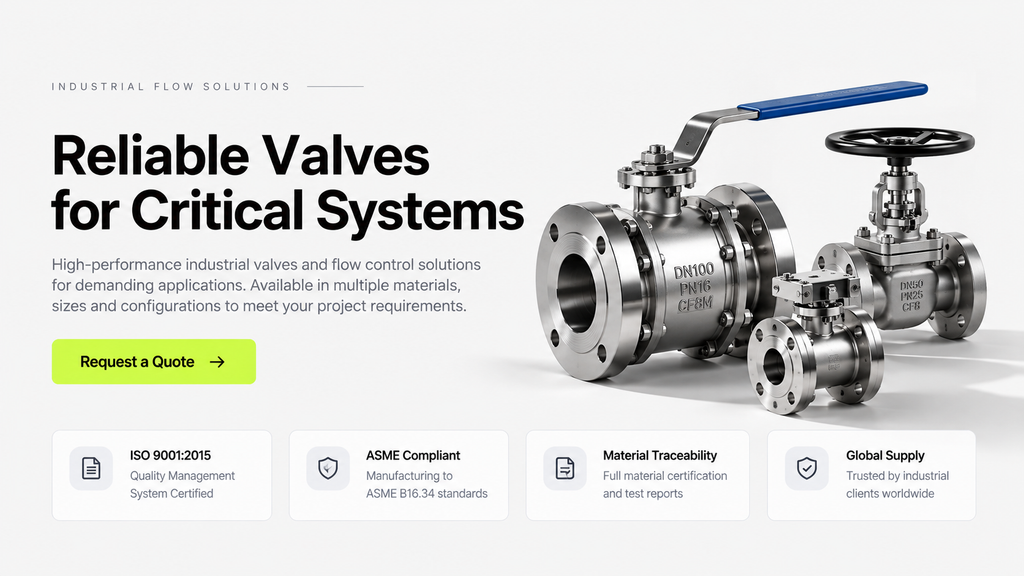
For example, a precision manufacturing homepage could feature:
Headline: Precision CNC Manufacturing for Demanding Industrial Applications
Supporting text: Custom machined components, documented quality processes, and production support for engineering and manufacturing businesses.
Primary action: Request a Technical Quote
Trust section: Verified ISO 9001 certification, relevant aerospace quality management certification where held, and a link to the company’s quality assurance documentation.
This structure communicates what the company does, why a buyer should investigate it, and how to initiate a commercial enquiry.
Five design principles for presenting certifications
1. Prioritize relevance. Show the credentials most meaningful to your target customers rather than every award or association membership.
2. Make claims verifiable. Where appropriate, provide certificate numbers, issuing organizations, certificate documents, or recognized verification sources.
3. Use authorized certification marks. Never recreate official logos or imply endorsement where none exists.
4. Make the section mobile-friendly. Certification information should remain legible on smaller screens without overwhelming the main service message.
5. Connect credentials to capabilities. Link buyers to relevant quality assurance, compliance, safety, or technical capability pages for further evaluation.
Above-the-fold placement should support the page’s primary purpose rather than dominate it.
A buyer still needs to understand what your company actually delivers.
6. Build a Dedicated Certifications and Compliance Page
A homepage trust section provides a useful introduction, but enterprise procurement teams often require more detail.
This is where a dedicated Certifications, Quality Assurance, or Compliance page becomes valuable.
The page should organize relevant evidence in a way that supports formal supplier evaluation.
Depending on the industry, it may include certification scopes, issuing bodies, relevant validity dates, licensing information, quality procedures, insurance documentation, and applicable industry standards.
Sensitive documents can be made available through controlled requests rather than publishing confidential information openly.
For businesses operating across multiple jurisdictions, the page should also clarify where particular licenses or approvals apply.
A dedicated compliance page can support technical SEO when it contains substantive, accurate information relevant to the services provided.
However, simply adding certification logos or repeating standard names won’t guarantee improved search rankings.
Its primary value is making supplier qualification information easier to discover, understand, and verify.
7. Compliance Information Can Help Reduce Perceived Procurement Risk
Commercial property managers and industrial buyers may face significant consequences when selecting an unsuitable contractor.
Poor installation quality could result in operational disruption.
Failure to meet applicable regulatory requirements may create legal or compliance exposure.
Inadequate technical capabilities can contribute to delays, rework, and increased project costs.
As a result, procurement professionals look for evidence that prospective suppliers understand the risks involved.
A website that clearly communicates relevant qualifications, safety processes, technical capabilities, and project experience helps address some of these concerns.
But certifications shouldn’t be presented as guarantees of project success.
They are pieces of evidence within a broader evaluation that may also consider capacity, financial stability, references, pricing, insurance, and contractual terms.
The commercial advantage comes from removing uncertainty early in the buyer’s journey.
A supplier that makes qualification evidence accessible gives procurement teams fewer reasons to abandon the initial evaluation because information is missing.
Your Website Should Demonstrate the Standards Behind Your Operations
Industrial businesses invest considerable resources in meeting quality requirements, maintaining licenses, training employees, and developing reliable operating procedures.
Yet many fail to communicate those investments effectively online.
A manufacturing company may hold valuable quality management certifications but mention them only in a PDF brochure.
A fire protection contractor may employ highly qualified specialists but provide no clear explanation of relevant personnel credentials.
An engineering firm may have extensive commercial project experience but offer little verifiable evidence on its homepage.
These gaps make it harder for buyers to assess the business confidently.
Your website should not force procurement professionals to investigate basic qualifications that your company can communicate clearly and accurately.
For industrial and commercial contractors competing for substantial projects, a well-structured website can help turn real operational credibility into stronger buyer confidence.
That doesn’t mean decorating every page with certification badges.
It means making verified qualifications, technical expertise, and relevant project evidence part of a coherent supplier evaluation experience.
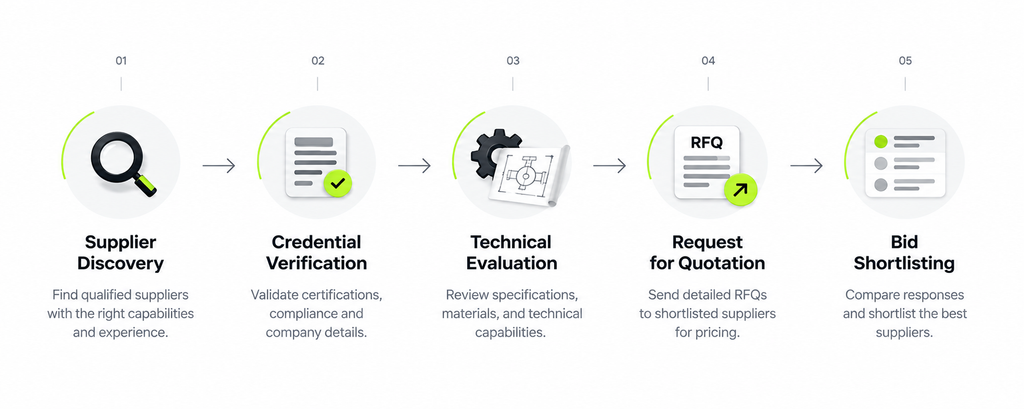
Make Your Industrial Website Easier to Trust With Cruxe Studio
At Cruxe Studio, we design and optimize websites for industrial, engineering, manufacturing, and commercial service businesses.
Our approach focuses on more than visual presentation.
We help businesses communicate technical capabilities, organize important qualification information, improve search visibility, and create clearer routes for commercial enquiries.
Whether your existing website needs a more credible homepage, dedicated compliance pages, or a complete redesign, the objective is to present your business in a way that supports serious B2B purchasing decisions.
Your operational credibility should be evident long before a buyer requests your first quotation.